
Hype Stories · toys
How K'NEX Went From Rejected Idea to 90s Toy Craze
Mattel, LEGO, Tyco and Hasbro all said no. Then a wedding, a drinking straw, and a construction toy that actually moved took over the 90s.
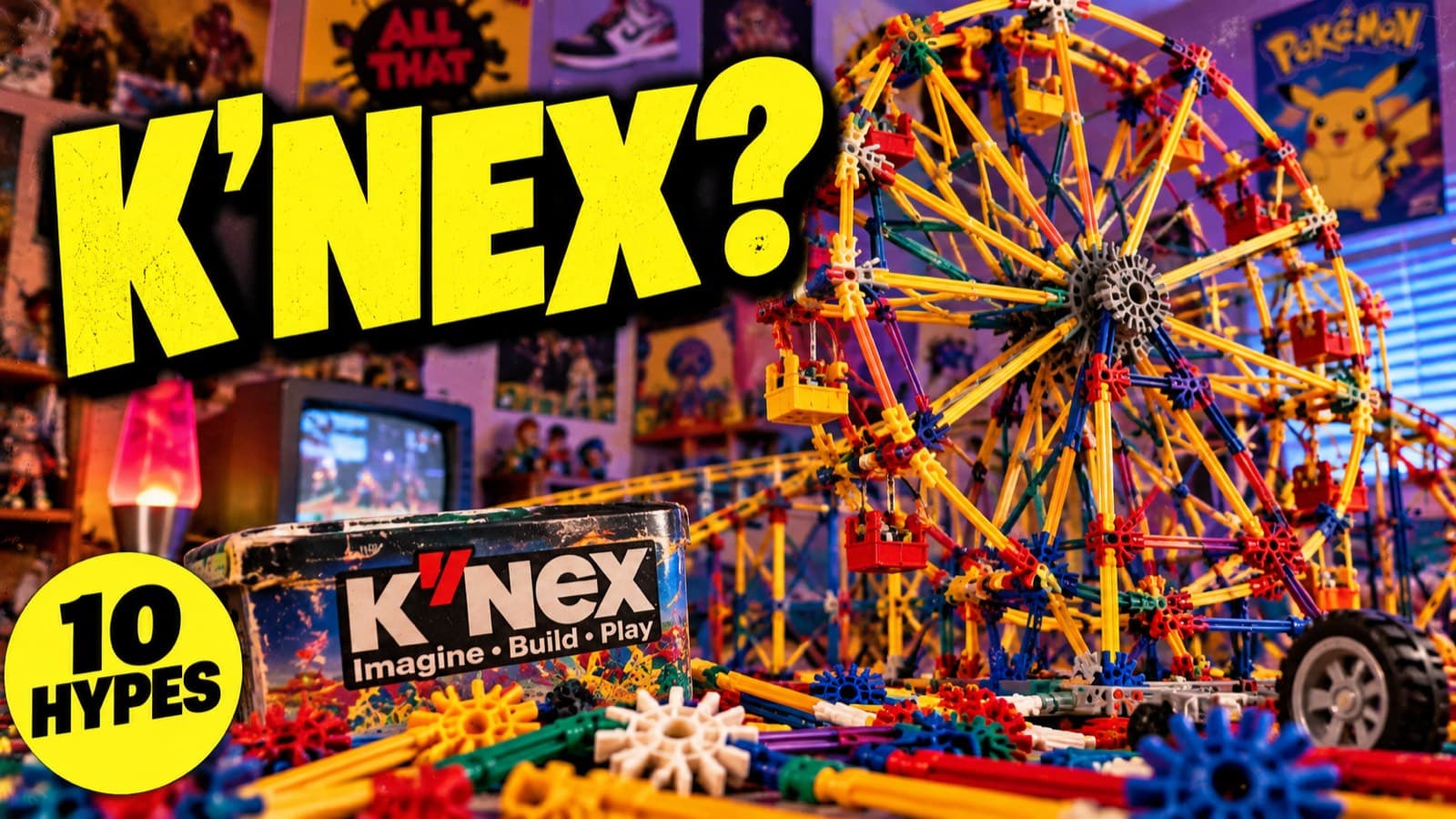
They all said no
Most of them are forgotten. But in the early 1990s, four major toy companies reportedly passed on the same idea.
Mattel. LEGO. Tyco Toys. Hasbro. They all said no. The idea was K'NEX. And somehow, the toy those companies rejected became a serious construction-toy competitor.
A wedding and a straw
The often-told story starts with Joel Glickman at a wedding. While everyone else was socializing, he was playing around with plastic drinking straws at the buffet table.
What if you could make a construction toy using straw-like rods and connectors? He already had an advantage most inventors didn't: the family plastics business, injection-molding equipment, and people who could turn the idea into actual pieces.
Not another pile of bricks
The result was a construction system built around rods, connectors, wheels and gears. Instead of stacking blocks, you built frameworks — towers with open space, gears that connected, wheels that turned.
You weren't only asking what you could build with these pieces. You could also ask what you could make these pieces do. That difference is what made K'NEX memorable.
Hard to explain. Easy to show.
In 1992, K'NEX began appearing in independent toy stores and a Toys “R” Us test in Philadelphia and Detroit, where sales were described as spectacular. By 1994, U.S. sales had reached about $44 million.
Walmart still wouldn't carry it — too expensive for the discount aisle. So the sets got bigger and more mechanical. Displays like the Big Ball Factory did what a photograph of rods in a box could not: they moved, and people understood.
How big can you build it?
Europe took to the in-store demonstrations. Construction toys were a bigger share of that market, and by 1997 European sales had reached roughly $70 million — number two behind LEGO.
LEGO had bricks. K'NEX had frameworks. The companies that said no had looked at a prototype. Kids looked at it and started building. Once they started, the question wasn't whether K'NEX could compete. It was: how big can you build it?