
Hype Stories · culture
How Jerry Springer Went From Nearly Canceled to Beating Oprah
The Jerry Springer Show began as serious television. By 1998, its fights, chants and security guards had made it a daytime sensation—and a target for critics.
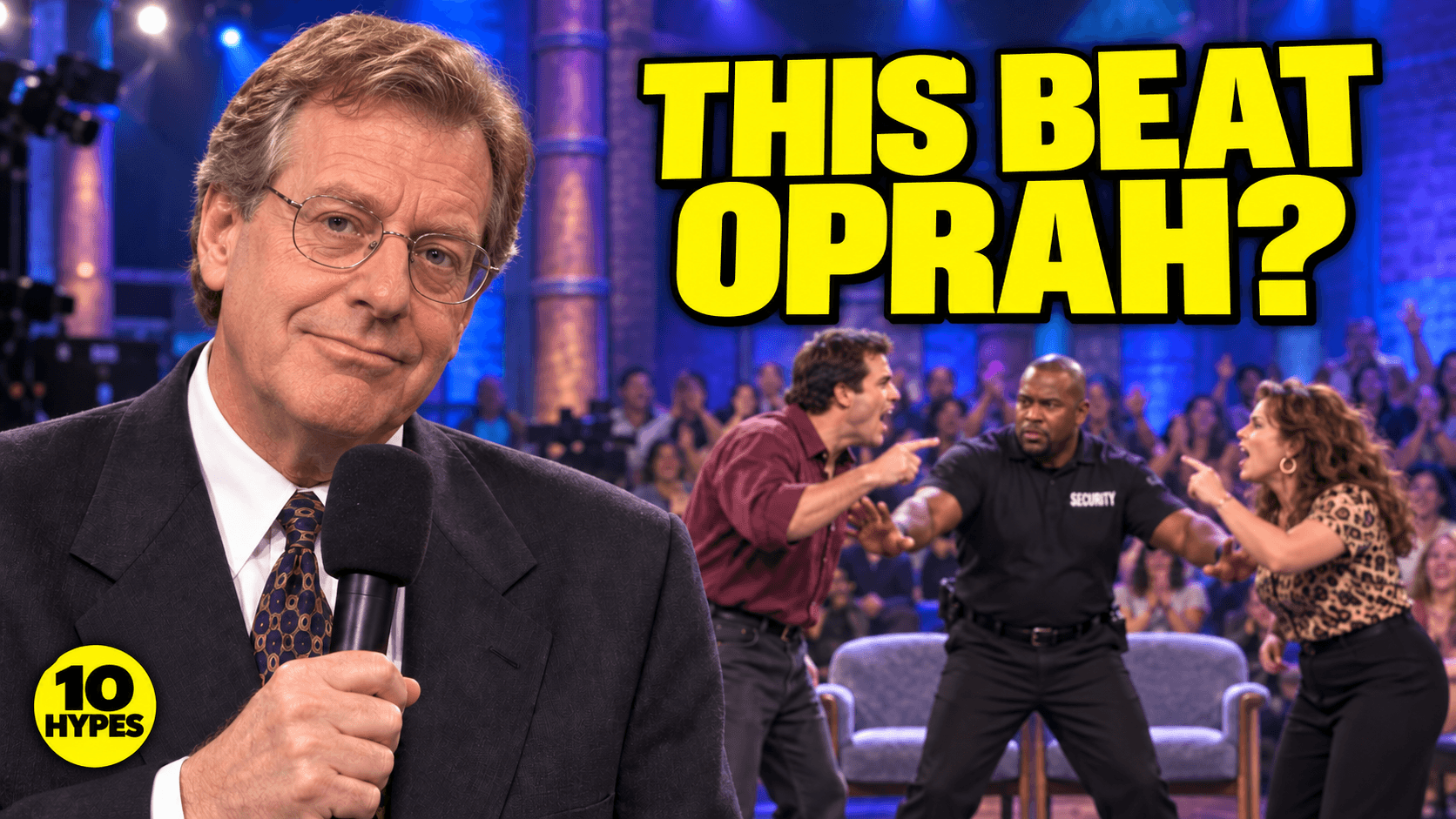
From serious talk to onstage chaos
The Jerry Springer Show began with issue-driven discussions and guests like Jesse Jackson and Oliver North. It was a serious talk show hosted by a former mayor—and it wasn’t attracting enough viewers.
By 1994, the show was facing cancellation. New executive producer Richard Dominick shifted its focus toward sex, relationships and conflict, aiming to catch younger viewers flipping through channels. Confrontations that had once been edited out began reaching audiences at home, and the show’s signature spectacle took shape: secrets revealed, guests confronting one another, and security guards rushing in as the audience chanted, “Jerry! Jerry! Jerry!”
The guards became familiar faces, too. Steve Wilkos and his colleagues appeared so often that viewers recognized them outside the studio. And for those who wanted more than the broadcast could show, an uncensored VHS tape, Jerry Springer: Too Hot for TV, sold around a million copies by summer 1998.
A ratings high—and a backlash
In February 1998, Springer beat Oprah for a week. During May sweeps, it won every week, averaging nearly ten million viewers to Oprah’s 7.7 million. A show that had nearly been canceled was now daytime’s ratings leader.
But its success brought scrutiny. Critics targeted confrontational talk shows, and Springer faced claims from former guests that their stories were faked—allegations the show’s executives denied. A boycott led by Chicago priest Michael Pfleger prompted several advertisers to pull out, while NBC’s Chicago station sought to leave its contract.
What was Springer without the fights?
In June 1998, the show began airing a version without physical violence. At first, ratings barely changed. By early July, Springer had slipped from first place into a tie with Oprah. Some fights later returned to the broadcast, though the show continued to face pressure, and fighting was cut back again in spring 1999. By April, its rating was down 45 percent from a year earlier, and Oprah was back on top.
Ratings can shift for many reasons, so that drop wasn’t a controlled test. Still, the show had become famous for something its distributors repeatedly tried to remove. Springer himself stayed calm amid the chaos, signing off with a reflective Final Thought and, “Take care of yourselves, and each other.” The show had started with serious discussions; by 1998, America couldn’t look away from the fights.