
Hype Stories · games
How Pogs Took Over America’s Schoolyards—and Then Disappeared
Pogs became a 1990s sensation without a blockbuster movie, video game or massive advertising campaign. Kids spread the simple collecting game from one schoolyard to another—until bans, arguments and an overcrowded market helped bring the craze to an abrupt end.
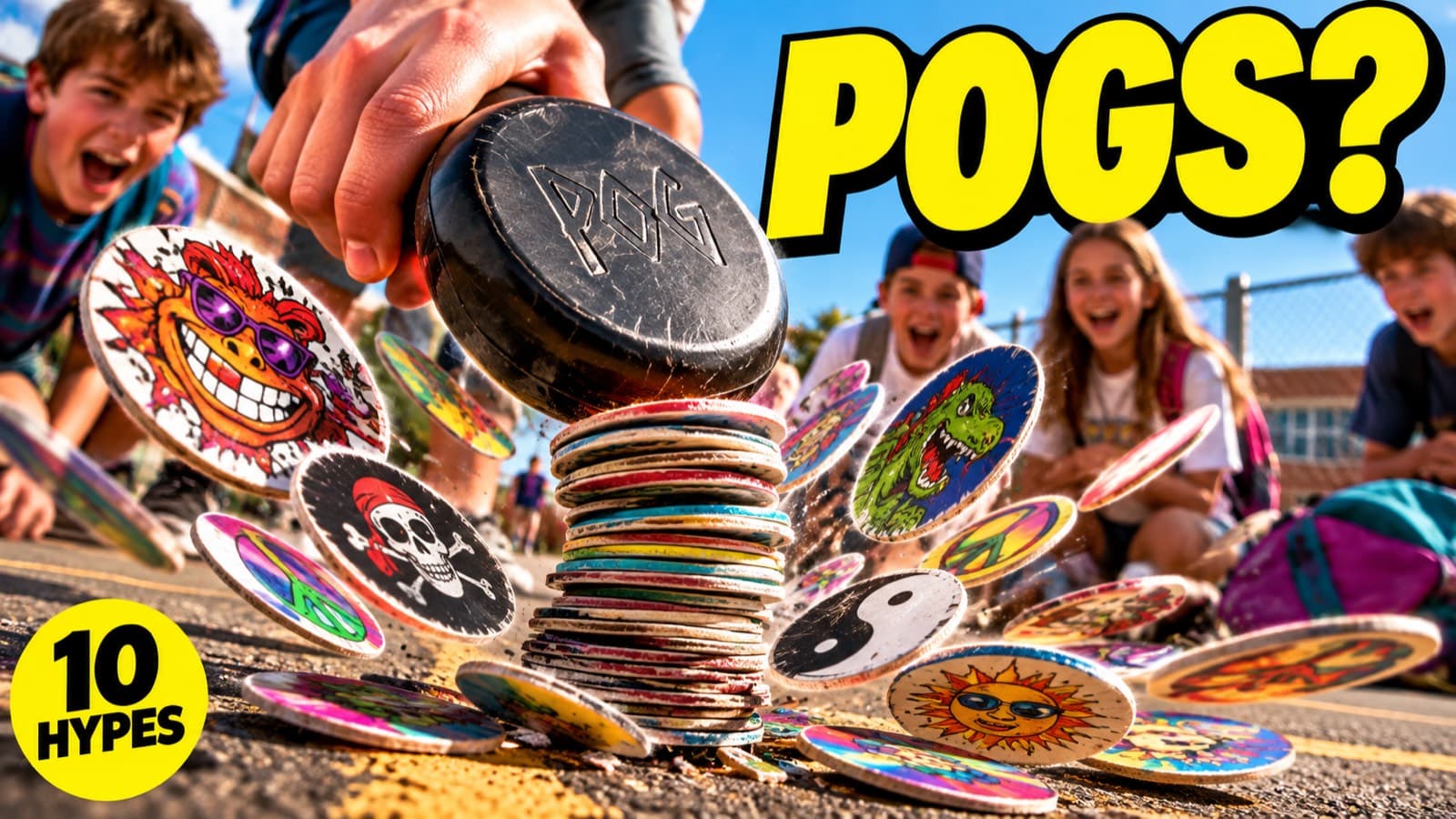
How Pogs Became a 1990s Schoolyard Craze
A cardboard disc the size of a bottle cap. A heavy plastic slammer. For a few years in the 1990s, that was enough to take over schoolyards across America.
Pogs became a full-blown craze, complete with tournaments, specialized products and a World POG Federation. Yet the strangest part was not simply how popular they became. It was how they spread.
There was no blockbuster movie, major video game or huge television campaign behind them. One kid showed another kid. That kid brought Pogs to school. Soon, everyone wanted a stack of their own.
From Hawaiian Milk Caps to Pogs
The game was older than the fad. Children in Hawaii had played with cardboard milk caps for decades, stacking them and throwing something heavier at the pile to see which caps flipped.
In 1991, teacher Blossom Galbiso revived the game at Waialua Elementary School on Oahu. Galbiso had played it as a child and introduced it to her fifth-grade students as a more peaceful alternative to rougher playground games. She also incorporated it into her teaching.
The children especially liked caps from POG, a Hawaiian drink made with passion fruit, orange and guava. The name stuck, giving the old milk-cap game a new identity.
Soon, the caps became more than playing pieces. Kids collected, traded and decorated them. Different designs mattered. Players did not just want more Pogs—they wanted the ones their friends did not have.
How Pogs Reached California
By the early 1990s, Hawaiian businesses were producing new caps, accessories and slammers. The game was gaining momentum, but it remained largely a Hawaiian phenomenon until Orange County businessman Bill Hodson helped bring it to California.
Once again, children drove the growth. Hodson showed the game to neighborhood kids, who showed their friends and carried it into schools. There was no giant launch. The kids were the marketing, and the playground was the campaign.
Why the Playground Craze Spread So Fast
Pogs were unusually easy to demonstrate. Players stacked the discs, struck them with a slammer and collected whatever flipped over, depending on the rules. Watching a game made other children want to try. Trying it made them want their own Pogs. Before long, they had collections.
The game combined playground competition with the collecting appeal of baseball cards. Every recess offered another chance to play, trade, compare designs or show off a new slammer.
By 1993, Pogs were spreading through Southern California schools. In early 1994, hundreds of children were attending local tournaments. One event in Irvine attracted around 200 players, while promoters said roughly 10,000 children in Orange County were already playing, trading or collecting.
An industry quickly formed around the craze. Companies released Pogs featuring sports, cartoons, animals, dinosaurs and other designs aimed at children. Retailers, sponsors and organized competitions followed.
When Playing for Keeps Became a Problem
Then playing for keeps changed the mood.
In these games, players could claim the Pogs they flipped. Losing was no longer just losing a round. A child could watch a favorite design—perhaps one collected over weeks—become someone else’s property.
Schools began receiving complaints about arguments, disputed results and accusations that children were effectively gambling with their collections. Pogs also started appearing in classrooms, making the obsession harder for teachers to control.
By February 1994, roughly half of Orange County’s elementary and middle schools had banned or restricted Pogs. Other schools also pushed back, either prohibiting them outright or limiting when children could play and trade.
It was a striking reversal. Galbiso had revived the game as a peaceful playground activity. Now schools were trying to remove it from their playgrounds.
How the Craze Lost Its Momentum
Those restrictions threatened the very system that had made Pogs successful. School was where children discovered new designs, traded collections, challenged friends and introduced other players to the game. Take away that environment, and the cycle began to break.
The market also became crowded. As more companies produced Pogs, the discs became less novel. What had once felt like a discovery was suddenly everywhere, making the hunt for new designs less exciting.
By 1995, the craze was losing momentum. Sales slowed in areas where schools restricted the game, and retailers were already predicting that the fad would soon end.
The strength of Pogs had also been their weakness. They spread because children spread them, without a central marketing machine. That made their rise feel unstoppable. But when schools disrupted the playground network, the momentum became difficult to maintain.
Within a few years, Pogs went from an old Hawaiian milk-cap game to a national business—and then to a piece of 1990s nostalgia.
For those who played, the memories can still be vivid: the weight of a slammer, the sound of it striking the stack, the excitement of finding a desirable design and the pain of watching a favorite Pog flip during a game for keeps.
Pogs did not need a movie, a video game or much advertising. They only needed one kid to say, “Check this out.”
For a few years, America did.